

Have you ever seen great leaders, charismatic speakers, or inspiring individuals being interviewed and found yourself wondering how they manage to speak so easily? They have a clear understanding of when to begin, how to express their thoughts, when to pause and when to stop. A straightforward sentence seems impressive when put forward by them. You may have questioned to yourself why you are not able to sound that confident.
The basic fact is that people are not born with the ability to speak perfectly. The skill of effective communication can be learned, rather than being something one is naturally gifted with. Just as a dull axe will not efficiently cut down a tree no matter how hard you beat it, simply increasing the amount you speak will not improve your speaking abilities. You have to take the time to sharpen the axe by training the ways in which you think, listen, respond, and present yourself.
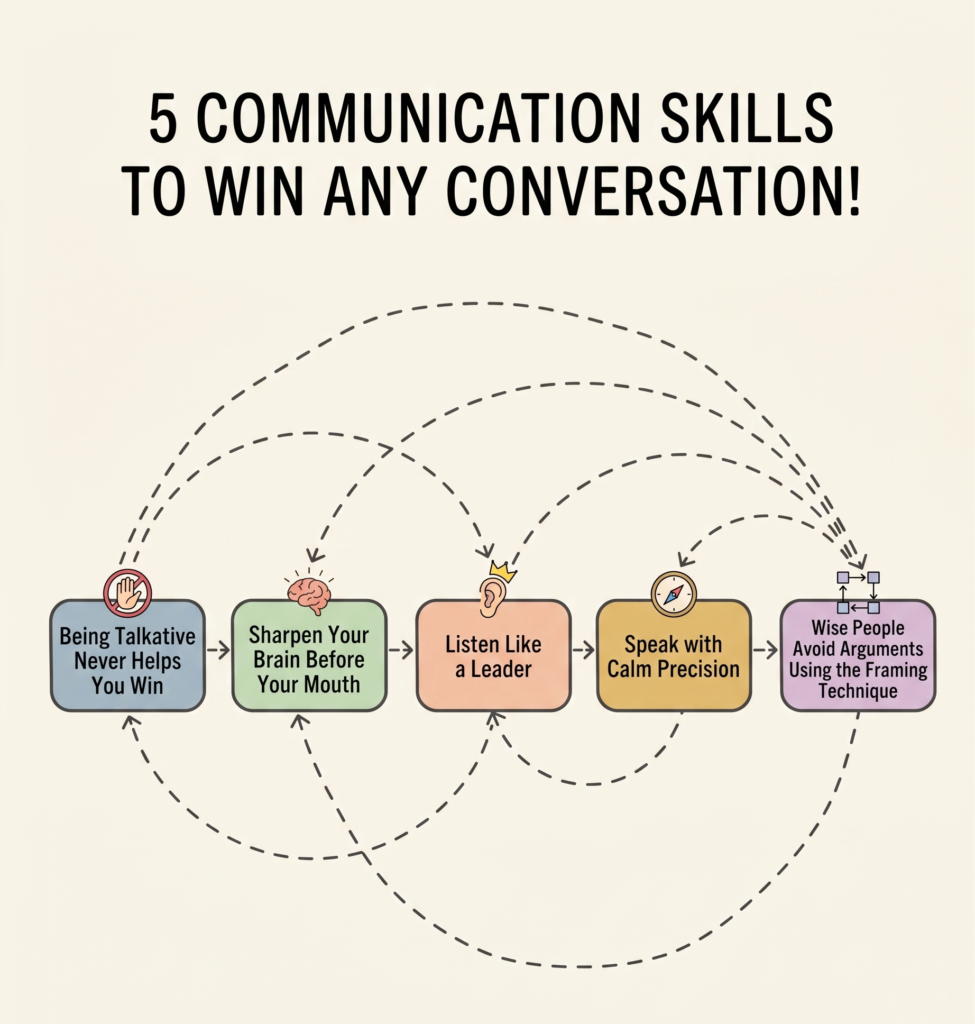
In this guide I have mentioned clear 5 communication skills that will enable you to win any conversation, so that you can express yourself clearly, listen actively, and leave a positive impression that lasts without having to force it.
Table of Contents
- Skill 1: Being Talkative Never Helps You Win
- Skill 2: Sharpen Your Brain Before Your Mouth
- Skill 3: Listen Like a Leader
- Skill 4: Speak with Calm Precision
- Skill 5: Wise People Avoid Arguments Using the Framing Technique
- Exclusive Resources & Productivity Tools
- Summary: Average Communicator vs. Master Communicator
- Frequently Asked Questions (FAQs)
- Conclusion
Skill 1: Being Talkative Never Helps You Win
The person who actually wins a conversation is usually not the one who talks the most. Genuine victory in a conversation comes from staying calm listening carefully and putting thoughts into words at the right moment. Then interrupting others or turning discussions into ego contests competent communicators wait for the right moment; people listen when they speak because their words are clear and meaningful.
Skill 2: Sharpen Your Brain Before Your Mouth
When your mind is scattered, missing information or full of anxiety the words you speak will reflect that disorder. You must give your brain good-quality material if you expect your speech to be clear and well-articulated.
• Increase your knowledge: read books follow events, around the world and explore different points of view.
• Improve agility by solving puzzles, Sudoku or math problems because this helps with pattern recognition.
• Work through the Small Talk Ladder by asking people thoughtful questions, which moves you out of your comfort zone and builds confident communication.
Skill 3: Listen Like a Leader
Great leaders are famous for their public speaking but their real strength is in how they listen. Poor communicators listen only to plan their reply while strong leaders listen to understand the speaker’s tone, pace and hidden signals.
Listening is not an activity; it is a strategic leadership skill. When you listen deeply your replies become more relevant and impactful.
Skill 4: Speak with Calm Precision
Speakers often panic and over‑explain. Clear communicators cut out filler words and use a structure like the 1‑1‑1 Rule: one clear idea, a measured pace and intentional pauses.
Silence is not awkward; silence is punctuation. Also, your delivery. Presentation matter. Being witty, without being rude keeps discussions relaxed. For example, if a friend says you are late of listing traffic excuses you can smile and say, “I am not late I am just giving you time to miss me.”
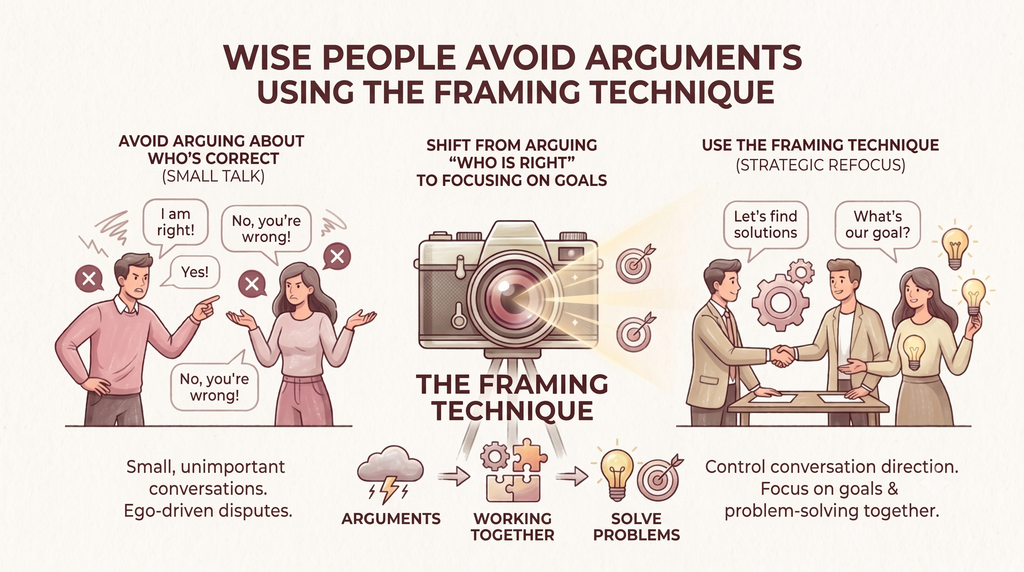
Skill 5: Wise People Avoid Arguments Using the Framing Technique
When people don’t know how to talk their conversations become small and unimportant. They argue about who’s correct. People who are sure of themselves don’t fall into this mistake. They use the Framing Technique. The Framing Technique works like a camera lens. The person who decides what the conversation is really, about controls where it goes. Of focusing on small issues take a step back. Change the topic to focus on goals. Turn arguments into working together to solve problems.
Exclusive Resources & Productivity Tools
To take your communication habits and personal organization even further, check out these recommended tools:
🔗 Explore Levikah Daila Official Website: Access long-form guides, articles, and learning resources at https://levikahdaila.com/
📋 Download Aligned Planner Notion Template: Structure your daily routines and habit tracking seamlessly: https://levikahdaila.com/resources-levikah-daila/alignedplanner
Summary: Average Communicator vs. Master Communicator
Here is a quick overview comparing standard verbal habits with master communication practices:
| Dimension | Average Communicator | Master Communicator |
| Talking Volume | Tries to dominate conversation by talking most | Stays calm, listens, and speaks with impact |
| Mental Prep | Speaks impulsively without structure | Sharpen brain through books, puzzles & current news |
| Listening Style | Listens passively just to interrupt or reply | Listens like a leader to understand deep context |
| Delivery Pace | Panics, over-explains, and fears silence | Uses calm precision, witty tone, and silence as punctuation |
| Disagreements | Gets dragged into petty arguments | Applies Framing Technique to realign on shared goals |
Frequently Asked Questions (FAQs)
Q1: Can communication skills be improved if I am naturally shy?
Yes! Communication is a skill that can be learned not something you are born with. By working on listening building your understanding of topics and using pauses on purpose quiet people can become very good at talking and connecting with others.
Q2: How does the Framing Technique stop unnecessary arguments?
The Framing Technique changes the conversation so it is about shared goals or big facts of personal opinions. This makes people less defensive. Helps them work together more easily.
Q3: Why is silence considered useful during a conversation?
Silence works like a stop sign, in a conversation. Taking a moment to be quiet shows that you are thinking stops you from talking much and makes your next words more important.
Conclusion
At the end of a talk people don’t usually remember every word you said. They remember how connected, how respected and how understood they felt when they were with you. True confidence doesn’t mean you have to push your point or try to win every argument.
The time you go into a conversation stop trying to make an impression. Pay attention carefully stay here in the moment and use these five ways to communicate better. Which one of these five ways will you try today? Tell us about your experience in the comments, below!